Were Pryguny the first to "Speak in
Tongues" in Los Angeles?  Updated
14 June 2018 by Andrei Conovaloff Updated
14 June 2018 by Andrei Conovaloff"I am a ... Dukh-i-zhiznik
presviter Molokan....
The first Spiritual
Christian settlers from Russia arrived in Los Angeles,
from Ellis Island, in 1904. ... We have experienced the
visible manifestation of the Holy Spirit since about the 1830s
Short Answer Some believe "speaking in tongues" and "holy jumping" have occurred for hundreds, even thousands, of years. Founded in 1747 in England the United Society of Believers in Christ’s Second Appearing practiced “singing and dancing, shaking and shouting, speaking with new tongues and prophesying" — some migrated to the United States in 1774 where they met similar faiths. Charismatic religions existed in Europe nearly a century before Spiritual Christians reported an outpouring of the Holy Spirit in 1833 in Novorossiya (South Ukraine). Holiness jumping was reported in Los Angeles in April 1904, months before Spiritual Christians from Russia began to arrive in numbers in January 1905. How and whether these diverse faiths around the world are connected is continually researched and discussed by scholars. Long Answer George Samarin is a great-grandson of I. G. Samarin, and brother of Dr. William Samarin who extensively research and published about glossolalia:
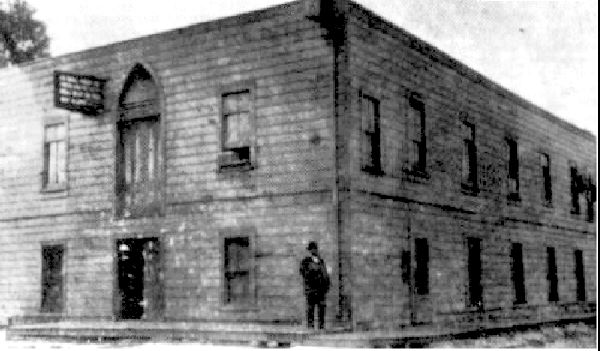
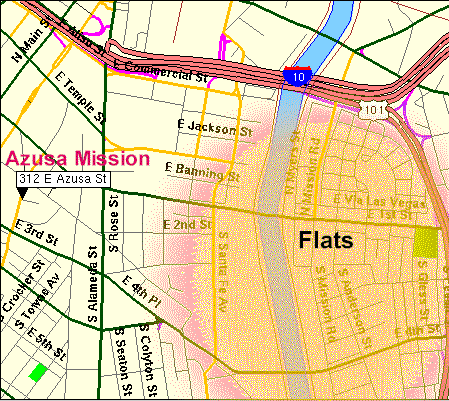
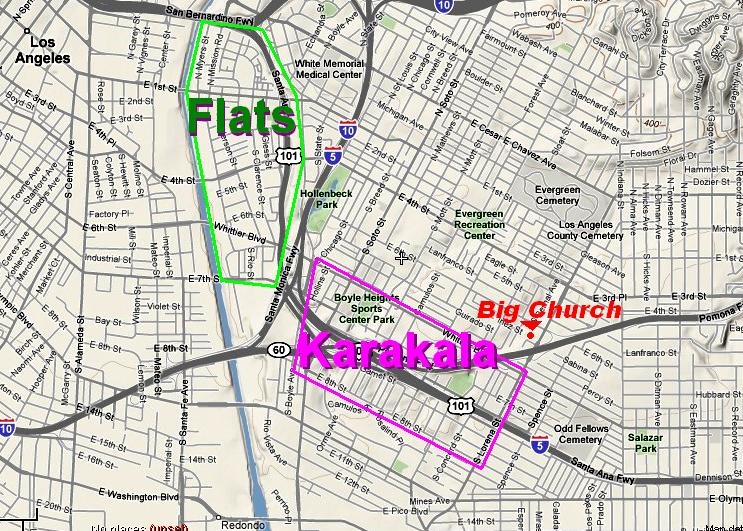
From 1906 to 1909, the Apostolic Faith Mission conducted three services a day, seven days a week, for over 3 years — 1000+ services! Thousands of seekers received the "tongues" baptism, including many Spiirtual Christians from Russia. Also many public Pentecostal revivals were conducted in tent meetings on Oake's lot and other locations around the Flats area slums where immigrants from Russia settled. English-speaking immigrants often translated at the services. Oake's lot became Pecan Playground, at First and Pecan Streets.
I first learned of this Apostolic Faith Mission in 1995 from a former President of the LA-UMCA, Paul Kosareff, who left the Dukh-i-zhiznik faiths to join a Pentecostal denomination. Paul and I met by chance in Phoenix, Arizona on the 4th of July 1995 while he and his wife were on a bus tour through Arizona. We chatted and exchanged addresses. Paul was excited about some history he wanted to send to me. Soon I got a large envelope with copies of old news clippings about the "Azusa Street Revival." I didn't understand the significance of these articles because I thought the church was in Azusa, California, not in downtown Los Angeles. (No Internet in 1995.) I could not figure out why Paul was so excited. When I saw George Samarin's letter 13 years latter, I connected the two stories, and began to search further. Fortunately, a lot of history was published for the 100th anniversary of the Azusa Street Revival in 2006, and much is easy to find on the Internet now. In Dukh-i-zhizniki Molokans in America (pages 101-102, end of chapter 5), John K. Berokoff reports about the Prygun leader Philip Mikhailovich Shubin and the Pentecosts: "During his 27 years in
America he was the outstanding speaker and orator of the
brotherhood with a wide acquaintance among non-Molokans Pryguny [outsiders],
not infrequently taking a choir of singers to
Pentecostal church meetings where he preached and
explained the
Molokan reasons for their migration. It was his
wisdom, his profound knowledge of the scriptures plus
his wide knowledge of Russian literature that enabled
him to repel the periodic attempts by leaders of
neighboring denominations—Baptists, Pentecostals, etc.—
to proselytize the Prygun Molokan
people ..."
More evidence of connections between the Azusa Street Revival and the Pryguny is reported in the newspaper The Apostolic Faith, which was distribute free to 50,000 subscribers, when the population of Los Angeles was 250,000. Many Spiirtual Christians from Russia in the Flat(s) knew about this church and saw this free paper, especially since it reported about them in the first issue, the church was within walking distance (1/2 mile from the Bethlehem Institutions), and elders exchanged visits. 1906 September — The Apostolic Faith (Volume 1 Number 1) — The first edition of the newspaper reports that Apostolic Faith Mission members spoke at a Prygun prayer meeting. In 1906, Spiritual Christians from Russia held Sunday services at the Bethlehem Institutional Church and the Stimson-Lafayette Industrial School, and welcomed guests at both locations which were 1/2 block from each other and about 1/4 mile east of the Apostolic Faith Mission. The Pentecosts invited the Spiritual Christians from Russia to attend their meetings, which many did with a translator: "Spiritual Christians from RUSSIANS
HEAR IN THEIR OWN TONGUE". 1907 April — The Apostolic Faith (Volume 1 Number 7) — The 7th edition reports about the Russian and Armenian Pryguny in the Flats: "Spiritual Christians from Russians and
Armenians
in Los Angeles are seeking the baptism. The Armenians
have a Pentecostal cottage meeting on Victor street,
between 4th and 5th. [Now
under the I-5 Freeway.] Some have been baptized
with the Holy Ghost."
[Page
57] Finally, between 1903 and 1912 several
thousand Russians and
Armenians arrived in the city, refugees from
Russia's increasingly repressive government. Unlike most
Russians, they did not belong to the Orthodox church.
They were Spiritual
Christians (folk Protestants) ethnic] Molokans,
literally "milk drinkers," a name they received
because they refused to fast from dairy products
during traditional fast days. More importantly,
they could be described as a "proto-Protestant'" group,
since they had been influenced by some of the
sixteenth-century Reformers. They also had a special
appreciation for the Holy Spirit. Many of them claimed
that they had been directed to leave southern Russia
through the gift of prophecy. They engaged in what was
often described as ecstatic behavior, jumping and
dancing; falling on the floor when they believed that
they were possessed of the Holy Spirit to do so; and
singing chant-like songs that strongly paralleled the
"singing in the Spirit" (a multi-layered, harmony-rich
singing in tongues that are unknown to the singers and
are believed to be inspired by the Holy Spirit) at the
Azusa Street Mission.
[Page 94] As the revival grew ... Seymour celebrated the spread of the revival to other congregations ... the Spiritual Christians from Russian Molikan [sic] community, ... He viewed them as fellow-workers. [Page 138, not online] While the mission was led by an African American pastor, dominated by and African American membership, and heavily influenced by African American worship patterns, it quickly developed into a multi-ethnic and multiracial congregation. ... non-African-Americans did bring their own gifts and experiences. ... Recent Spiritual Christian Russian and Armenian Molokan immigrants from Russia already practiced the unusual jumping and chanting also found at the mission. ... This was a revival unlike any other the city of Los Angeles had ever seen ... African Americans, Latinos, Armenians, Russians, Swedes, Germans, Italians, Chinese, Japanese, Native Americans, and other ethnic groups ... bountiful expressions of ecstatic manifestation such as speaking in tongues, prophesying, claims of dreams and visions, trances, healings, exorcism, and falling "in the Spirit." [Page 153, not online] "Singing in the Spirit" accomplished more than an expression of worship, however. It also provided a bridge that brought Spiritual Christians from Russia Russian and Armenian Molokans into the mission — among them the Shakarian and Mushegian families. These families arrived in Los Angeles in the 1905 emigration. The Spiritual Christians Molokans commonly practiced a kind of "sing-song" prayer, a form of vocal prayer and praise that resembled singing in Spirit." Walking down San Pedro Street in 1905, Demos Shakarian, grandfather of the Demos Shakarian who would later found the Full Gospel Businessmaen's Association, and his brother-in-law, Magardich Muchegian, passed the Azusa Street Mission. As they drew near, they heard sounds of praying, singing, and speaking in tongues coming from the mission — expressions that they identified as similar to their own. The single phenomenon of "singing in tongues" convinced Demos to embrace the mission as a place his family could worship. From the moment he heard it, he concluded that God was also beginning to move to America just as He had in their homeland of America and in Russia."(27) [Pages 189-190, not online] At the same time a group of Spiritual Christians from Russia [Armenian Pryguny] Armenians and Russians, who had come to Los Angeles in the Molokans immigration, opened cottage prayer meetings on Victoria Street between West Fourth and Fifth Streets that would quickly develop into an Armenians-language Pentecostal church. Lean more about the Azusa Street revival 1906-1909 in Los Angeles. In the following 100 years, about 14% of all Christians, 280 million people, identify with Pentecostalism in the world. Comments by American-born Armenian-Prygun historian Joyce Bivin We have a similar story in our community about the Azusa Street Revival. The story goes like this — quoted from a letter by M. Mushagian: "Our people came to Los Angeles right after the Azusa Street Revival. They used to attend the meetings even though they didn't understand the American language. They saw that the Holy Spirit was moving there like it did in the Old Country. So they accepted Pentecostal because they believed in Acts 2:4." There's really no reason to discuss who started speaking in tongues first. This manifestation of the Holy Spirit has been going on throughout the centuries since it was promised by Jesus and began (in Jerusalem, by the way!) with the Apostles 50 days after the Resurrection/Passover. It wasn't a movement as such until the Azusa Street Revival. The Armenians [Spiritual Christian Pryguny] apparently were worshiping in this manner, including dancing in the Spirit, (jumping, which my grandmother did at one of the Paskha meetings and the next day mother told me she was healed of whatever affliction she had at the time), prophesying, speaking in tongues, etc. before they came to America. I wasn't aware the other Pryguny Molokans responded to the Azusa Street meetings as did our Armenian Pryguny. After the Armenians visited the Azusa Street meetings, they eventually changed their identity from Armenian Dukh-i-zhizniki Molokans to Armenian Pentecostals. Though they kept the Dukh-i-zhiznik Molokan traditions in their worship, their theology shifted from focusing on Jesus and M.G. Rudomyotkin Rudometkin (whose book was next to the Bible on the table) to Jesus's teachings as defined by Pentecostal/Protestant doctrine. The first place our people gathered to worship was on Boston Street. The next place was on 431 S. Pecan Terrace, in a large room where my great grandfather eventually turned into a bath house. Then they moved to Gless Street [all in the Flats] and next to Goodrich Blvd [in East LA near Atlantic] before moving to Hacienda Heights. The Armenian-Pentocostal church today is located in Hacienda Heights, off Hacienda Blvd. on West. It's the first entrance on the right after you turn on West. They've removed "Armenian" from the name of the church to make it more neighborhood-friendly. They sing a couple of the old songs [Psalms, verses] right in the beginning of the service before continuing with the American choruses and hymns. They still observe all the Feasts of the Dukh-i-zhizniki. Mrgditch Perumean's grandson, Stanley is the leader [who died about 2005]. We learn that Spiritual Christians from Russia in Los Angles often attended the nearby Mission, and that Mission members often visited and documented the Spiritual Christians. With 3 services a day everyday, it was convenient for anyone working or shopping downtown to drop in, or walk a fourth mile from their first residences. The irony of these reports is that the Apostolic Faith Mission is credited by Pentecostals and some religious historians with introducing the Holy Spirit to Russia: The Origins of the Pentecostal Movement, by Vinson Synan, Ph.D. — Holy Spirit Research Center, Oral Robert University — "Soon ... the movement reached the Slavic world through the ministry of a Russian-born Baptist pastor, Ivan Voronaev who received the Pentecostal experience in New York City in 1919. Through prophecies, he was led to take his family with him to Odessa in the Ukraine in 1922 where he established the first Pentecostal church in the Soviet Union. Although he was arrested, imprisoned and martyred in a communist prison in 1943, Voronaev's churches survived incredible persecution to become a major religious force in Russia and the former Soviet Union by 1993." American Dukh-i-zhiznik oral history (documented in the Book of the Sun: Spirit and Life, Dukh i zhizn') reports that Spiirtual Christians received the "outpouring of the Holy Spirit" in the Milky Waters region (now in Ukraine) in 1833. Oral History forgot that the term Pryguny was first used about 1856 in the Caucasus, and later in the 1898 census. The diary of Vassili V. Verestchagin documents that Pryguny in the Caucasus in the early 1860s spoke in tongues, jumped to exhaustion, and held hands up in the air for more than an hour. These charismatic practices continue among Dukh-i-zhiniki in the U.S. and Australia. Quiz
Don't everybody jump into this discussion at once. :-) Answers
|