|
Ataturk University,
Erzurum, Turkey
Turkey Scholars Revive
History of Settlers from Russia. Spiritual
Christians are being researched by university professors
and students in Turkey. A conference was held in March
2011 to review findings and proposals. Erzurum
is 115 miles (189 km) west of Kars city.
|
E-mail from Vedat Akchayoz
< vedat@akcayoz.net >, April 23, 2011:
We did a collective work with the professors at
Ataturk University in Erzurum. Then, students at Ataturk
University came to Kars to conduct field research about Spiritual Christians Molocans
and Doukhobours. After completing these studies,
professors at Ataturk University invited me to hold a
conference about Spiritual Christians
Molocans and Doukhobours. It was a really
good, organized conference.
Soon, I will go to Armenia and Georgia to do research for my
book about Spiritual Christians
Molocans and Doukhobours. Do you know any Spiritual Christians Molocans
and Doukhobours in Armenia and Georgia? I would
like to interview with them. If you know Spiritual Christians Molocans
and Doukhobours there, please send me their
e-mails, contact details. I will be so pleased for all your
help. < vedat@akcayoz.net >
On April 30, 2011, eight Doukhobors will come to Kars from
Canada. I will show them around the towns. [See: Kars : A Journey of Discovery,
by Florence Chernoff-Lymburner. Doukhobor village photo
story, October 2009. — April 10, 2010] |
Kars’ın Ruhsal Hıristiyanları Molokanları ve
Doukhoborlar’ına ne oldu?
|
What Happened to Kars Spiritual Christians?
|
31.03.2011
—
BASIN
DANIŞMANLIĞI (Offline)
|
March 31, 2011 — PRESS
RELEASE
|
|
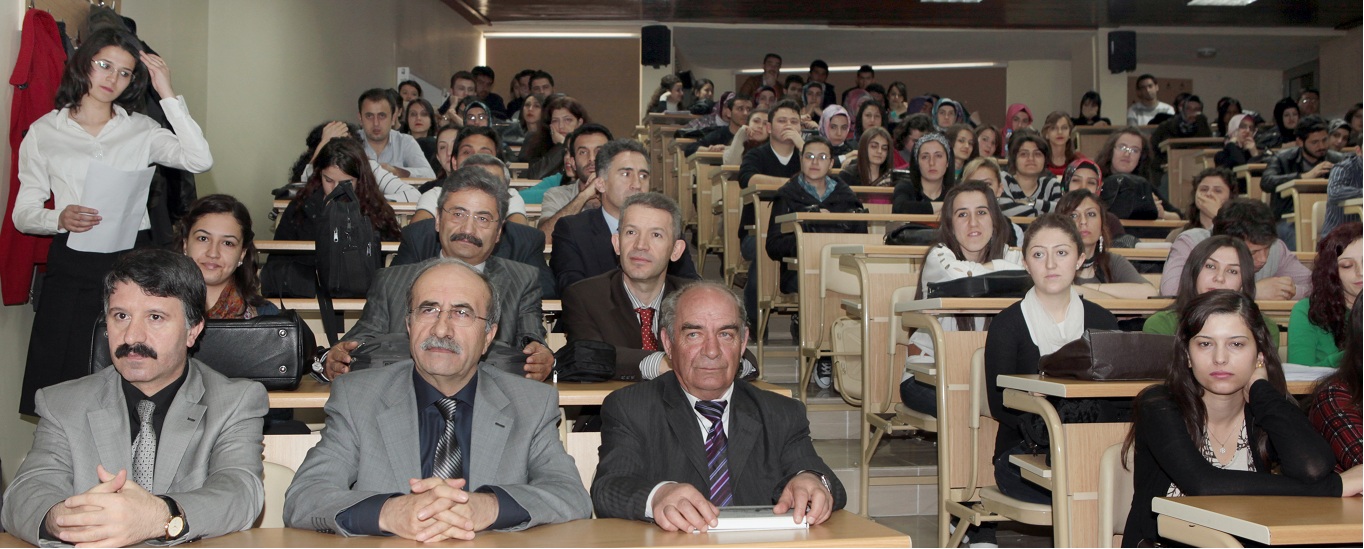
Packed
conference at Ataturk University about Spiritual
Christians.
|
Kars Kültür ve Sanat Derneği
ve Dünya Ruhsal Hıristiyanları Molokanları
Dostluk Derneği Başkanı Vedat Akçayöz, bir zamanlar
Kars ve yöresinde yaşayan Ruhsal
Hıristiyanları Molokanları ve Doukhoborlar
anlattı. |
Vedat Akchayoz, President of
the "Kars Culture and Art Association" and the "World Friendship
Association of Molokans," reported about Spiritual Christians Molokans
and Doukhobors who were once living in the region
of Kars. |
Edebiyat Fakültesi’nin
davetlisi olarak Erzurum’a gelen ve bir konferans veren
Akçayöz, Rus kökenli olan Ruhsal
Hıristiyanların Molokanların bu
ülkede savaşa, kilise ve din adamı otoritesine karşı çıkan
ve Hıristiyanlığı ilk ortaya çıktığı dönemlerde olduğu gibi
aracısız yaşamaya çalışan, bu nedenle de sürekli itilip
kakılan ve ülkeden ülkeye göç etmek zorunda bırakılan bir
halk olduklarını söyledi.
|
Akchayoz, who gave a lecture
at the invitation of the Erzurum Faculty of Arts, explained
that Molokans are of Russian origin but they were opposed to
war, the church and clergy. Pryguny and Dukh-i-zhizniki
They practiced Christianity according
to the Old Testament*
and tried to live their faith as did the the first
Christians. So for that reason their group was shoved and
forced to migrate from country to country.
|
Ruhsal
Hıristiyanları Molokanları ve Doukhoborlar
Kars ve yöresine de Rusya’da gördükleri baskı sonucu gelip
yerleştiklerini anlatan Akçayöz, Ruhsal
Hıristiyanların Molokanların ve
Doukhoborlar’ın yaratıcılıkları, becerileri
yüksek bir topluluk olarak gittikleri her yerde bulundukları
yerin gelişmesine, yaşam koşullarının daha iyi hale
gelmesine yaptıkları katkıyla hatırlandıklarını anlattı. |
Akchayoz related that Spiritual Christians Molokans
and Doukhobors were pressured in Russia and were
obligated to resettle to the Kars region where they still
are remembered for their creativity and skills. Akchayoz
said that no matter where they settled, Spiritual Christians Molokans
and Doukhobors were always trying to contribute
to the improvement of living conditions and development of
the region. |
|
Ruhsal
Hıristiyanları Molokan’ları
koruyalım
|
Preserving the Spiritual
Christians Molokans |
“Dünyanın unuttuğu, barış ve
kardeşliği, hak ve adaleti, yardımlaşma ve paylaşımı, yeşil
ve çevre dostu bir yaşam tarzını benimsemiş insanlardır Ruhsal Hıristiyanlar Molokanlar”
diyen Akçayöz, şöyle devam etti: |
Akchayoz, said: "Even
if the actual world forgets all about peace, brotherhood,
human rights, justice, solidarity, sharing, respect for a
green and environmentally friendly lifestyle, Spiritual Christians Molokans
always adopt them and live in respect of these values."
|
“Ruhsal
Hıristiyanlar Molokanlar ve Doukhoborlar
1830 ve 1840’lı yıllarında savaşa ve askerliğe karşı
oldukları, Kilise otoritesini reddettikleri ve Ortodoks
inanç sistemini derinden sarstıkları için Çar tarafından
zorla Çarlık Rusya topraklarından kopartılıp Kafkaslara
sürüldüler. Fakat Türkiye’de de askere alınmak istenmeleri
üzerine 1899 yılından başlayarak Cumhuriyet döneminde de
Kars bölgesinden Kanada’ya doğru zorunlu göçleri devam etti.
Ruhsal Hıristiyanlar Molokanlar
ve Doukhoborlar canlarını kurtarmak için göçtüler
ama onların el emekleri ile yaptıkları köyleri, evleri,
badvalları (yer altı bodrum), değirmenleri, mezar taşları
Kars coğrafyasında korumasız olarak hala duruyor.” |
"In 1830 and 1840 Spiritual Christians Molokans
and Doukhobors were rejected by the Orthodox
Church and forced by the Tsar to abandon their homeland
because they were against the war and the military. They
were accused of discrediting the authority and the system of
the Orthodox church and the belief system. They were driven
out from the Tsarist Russia terrritory to the Caucasus. In
Turkey, where they lived in peace for years, Spiritual Christians Molokans
and Doukhobors were once again confronted by the
threat of military recruitment. As Spiritual
Christian Molokan males were
appealed to the military service after 1899 the congregation
was forced to migrate to Canada. The migration of Spiritual Christians Molokans
and Doukhobors from Kars region continued during
the Republican era of Turkey [1923+]. Spiritual
Christians Molokans and Doukhobors
migrated in order to save their lives but the villages, the
homes, the cellars (badval
: podvali),
the mills, and grave stones they had built with their own
hands in the Kars area are still there but unprotected."
|
1898-1915 yılında,
10.000 Ruhsal Hıristiyanlar Kuzey Amerika'ya Kafkasya'dan
taşındı — Doukhoborlar ~7,500 (~30%) 1898-1899 — Pryguny,
Molokane, Sionisty ve Subbotniki ~3,000
(~1%) 1904-1912.
|
During
1898-1930 more than 10,000 Spiritual Christians
moved from the Caucasus to North America — Doukhobors ~8,800 (~30%) 1898-1830 — Pryguny, Maksimisty,
Molokane, Sionisty
and Subbotniki ~3,000 (~1%) 1904-1912. |
Ruhsal
Hıristiyanlar Molokanlar ve Doukhoborlar’ın
şuanda Amerika, Kanada, Rusya, Gürcistan, Orta Asya, Avusturalya, Meksika, Uruguay
ve Türkiye gibi dünyanın dört bir yanına dağılmış durumda
olduklarını ifade eden Akçayöz, şunları kaydetti:
|
Akchayoz, said: "Spiritual Christians Molokans
and Doukhobors are now spread all over the world
in countries like the United States, Canada, Russia, Georgia, Central Asia, Australia,
Mexico, Uruguay and Turkey.
|
“Geçmişte Kars’ın Zöhrap,
Atçılar, Çalkavur, Şahnalar, Çakmak, İncesu, Karakale ve
Ardahan bölgesine yerleşen yaklaşık 11 bin kadar Ruhsal Hıristiyan Molokan
ve Doukhobor vardı. Türkiye'de
bir kaç 100 vardır. Kars'ta Şimdi ise iki elimizin
parmakları kadar azaldılar. Günümüzün, ağır geçim şartları
altında ezilen ve kültürümüzün bir parçası olan bu insanları
koruyamazsak, çok değil beş on yıl sonra tamamen yok olup
gidecekler.” |
In the past, there were
about 11,000 Spiritual Christians
Molokans and Doukhobors settlers in the
Kars area, who lived in Zuhrap, Atchilar, Chalkavur,
Shahnalar, Insesu, Karakale, and Ardahan region. Today their
number in Turkey is a few 100
not even up to the number of our fingers.
If we don't protect these remaining Spiritual
Christians Molokans today who are
suffering under severe living conditions, in 5 or 10 years
they all may be gone." So we have to and must protect
these people who are part of our culture. |
Kars
Spiritual Christian Villages, 1879-1921
Blue =
non-Dukhobor villages — Red
= Doukhobor villages — Large Map
Mavi
= Malakan ve Prygun köyler — Kırmızı =
Dukhobor köyler — Büyük Harita
Map
by Jonathan Kalmakoff, Doukhobor
Genealogy Website.
|
Özbek: Ruhsal
Hıristiyanların Molokanların
çalışkanlığı örnek alınmalı
|
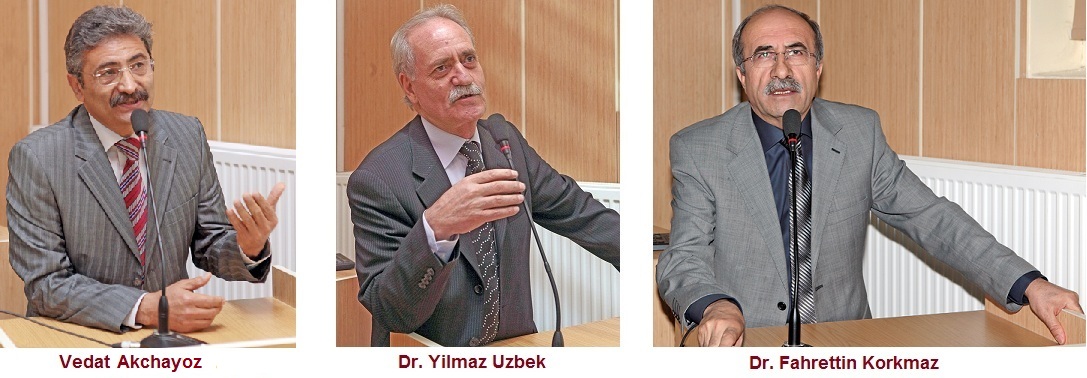
Uzbek: Spiritual Christians Molokans
set an example for hard work |
Edebiyat Fakültesi Dekanı
Prof. Dr. Yılmaz Özbek çocukluğundan itibaren Ruhsal Hıristiyanları Molokanları
hep duyduğunu ve iyi insanlar olarak tanıdıklarını
belirterek, “Kars çevresinde birkaç köye yerleşmiş,
çalışkanlıklarıyla tanınan bir topluluk. En dikkati çeken
özellikleri barışçı ve savaş aleyhtarı bir inanışa sahip
olmalarıdır” dedi. |
Dr. Yilmaz Uzbek, Dean of the
Faculty of Arts, said that since his childhood he had always
heard of Spiritual Christians
Molokans and knew them as good people. He
said: "Several villages located around Kars were communities
known for their hard working, labored people. One of their
most striking features was their attitude against war and
their commitment for peace." |
Dünyada şu anda en önemli
ihtiyaçlardan birisinin bilinçli üretim yapmak olduğunu
anımsatan Özbek, Ruhsal
Hıristiyanların Molokanların bu
konuda dünyaya örnek olabileceklerini ileri sürdü.
|
Uzbek reminded that one of
the most important needs in the world right now is the
conscious production and that Spiritual
Christians Molokans would set an
eligible example to the world. |
Korkmaz: Önyargılardan
kurtulmalıyız
|
Korkmaz: Get rid of preconceptions |
| Atatürk Üniversitesi Rektör
Yardımcısı Prof. Dr. Fahrettin Korkmaz ise konuşmasında,
insanın bilmediği kişi ve olaylarla ilgili hasımane bir
tutum içerisinde olabildiğini anımsatarak, önyargılı
davranmamak gerektiğini, bilinmeyen konular hakkında
konuşmadan ve bir yargı ileri sürmeden önce o konunun veya
şahsın iyice öğrenilmesi gerektiğini söyledi. |
Similarly, Ataturk
University Vice-Chancellor Dr. Fahrettin Korkmaz in his
speech said that someone can easily take a hostile attitude
against people or event he never heard about. But instead of
prejudiced feelings and behavior, the best way on unknown
issues would be the to thoroughly research the subject,
trying to understand it.
|
“Bir zamanlar Kars yöresinde
toplumumuzun bir parçası olarak yaşayan Ruhsal Hıristiyanların Molokanların
hakkında da çok az şey biliyoruz. Halbuki içinde yaşadığımız
toplumu çok iyi tanımamız gerekir” diyen Korkmaz, kültürel
farklılıkların, güzelliklerin farkında olunması ve hepsinin
korunması gerektiğini ifade etti. |
Korkmaz said: "We know very
little about Spiritual Christians
Molokans, who once lived in Kars as a part
of our society. However, we need to learn so much about the
community we are living in. We must be vigilant about
cultural diversity and the beauty coming from that social
variety. Everyone should be aware that all this has to be
preserved."
|
Korkmaz, “Türkiye’de en büyük
sorun nedir?” diye bir sorunun kendisine yöneltilmesi
durumunda, hiç tereddüt etmeden, toplum katmanları arasında
yeterli iletişimin sağlanamamış olmasını gösterebileceğini
kaydetti.
|
Korkmaz asks, "Does anybody
know what is the biggest problem in Turkey?" He directed
this question to himself and said that without any doubt he
could show that adequate communication was never provided
between layers of society [social
strata,
classes].
|
Konuşmalardan sonra Vedat
Akçayöz Ruhsal Hıristiyanlarla Molokanlarla
ilgili bir belgesel filmin gösterimini de yaptı. Akçayöz’e,
konferansı nedeniyle bir teşekkür plaketi de verildi. |
After the speeches, Vedat
Akchayoz showed his documentary film about Spiritual Christians Molokans.
At the end of the conference an appreciation plaque was
given to Mr. Akchayoz.
|
| BASIN DANIŞMANLIĞI |
PRESS RELEASE |
|
|
| Ludmila
Denisenko
tarafından tercüme, bir Malakan, yazar ve sanat tarihçisi.
Diye bir kitap yazdı Boyle bir Kars,
nedeniyle Mayıs 2011. |
Translation
by
Ludmila
Denisenko,
Molokan,
writer
and
art
historian.
Her new book Boyle bir Kars (Such a Kars) is due May
2011. |
|